

Different Highways
We're all travelling toward the same destination. Alzheimer's simply changes the road.

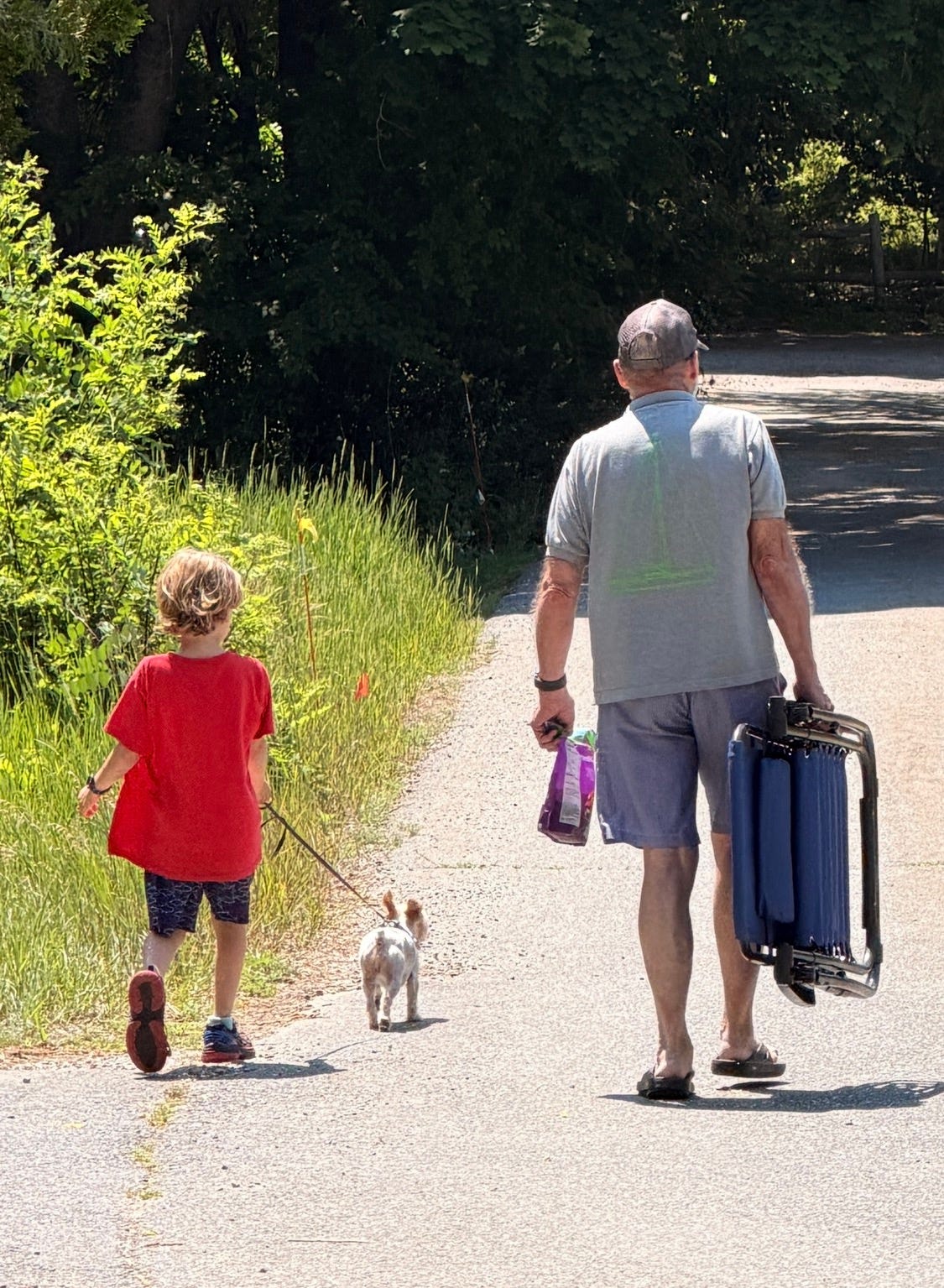
Different generations. Different companions. Different highways. Still moving forward.
A remarkable shift is taking place in Alzheimer’s research.
Treatments are becoming more sophisticated. Researchers are refining dosing schedules, improving safety, developing better blood biomarkers and learning more about who may benefit most from treatment, and when.
For people living with Alzheimer’s, and for those who love them, this is genuine progress.
It deserves our attention.
It deserves cautious hope.
But every family eventually discovers something medicine cannot fully prepare them for.
A diagnosis may change the road.
It does not stop the journey.
And after the appointment ends, life still has to be lived.
What Happens After the Decision?
Perhaps someone chooses Leqembi.
Perhaps they choose Kisunla.
Perhaps they enter a clinical trial.
Perhaps they decide that disease-modifying treatment is not the right choice for them.
Tomorrow morning still arrives.
Someone still stands in the kitchen wondering why they walked in there.
Someone still searches for glasses that are already on their head.
Someone still wonders whether they have asked that question before.
Someone still quietly worries that they are becoming a burden.
Life continues.
Medicine may influence the biology.
Families still have to live the life.
Medicine is trying to slow the disease. Families are trying to preserve the person.
That is not a criticism of treatment.
It is the reality that begins when the appointment ends.
The scientific community is asking increasingly sophisticated questions.
Can treatment become safer?
Can the risk of ARIA be reduced?
Can blood biomarkers reduce the need for expensive scans?
Can MRI monitoring become faster and more accessible?
Can we identify who is most likely to benefit?
These are exactly the right questions.
But they are not the only questions that matter.
Who helps someone preserve confidence after diagnosis?
Who helps them continue making choices for themselves?
Who helps a family adapt without quietly taking over?
Who supports the person whose memory is changing, the people whose lives are changing alongside them, and those navigating this road largely alone?
Who helps everyone continue living while medicine continues advancing?
Those questions deserve innovation too.
The Other Twenty-Three Hours
Appointments matter.
Infusions may matter.
Biomarkers matter.
But people do not live inside clinics.
They live during the other twenty-three hours.
At breakfast tables.
In supermarkets.
In cars and kitchens.
On walks.
During repeated conversations.
While deciding whether it is still safe to drive.
While trying to remember whether medication has already been taken.
While wondering how much help is enough, and how much begins to feel like control.
That is where confidence can be preserved or quietly lost.
It is where independence can be supported or unintentionally taken away.
It is where a thoughtful reminder can help someone continue doing something for themselves.
It is also where a Supporter can become exhausted, not because love has diminished, but because remembering for several people is heavier than it sounds.
Many of the brightest people working in Alzheimer’s are trying to improve the biology.
We also need people thinking about Tuesday.
Tuesday is where life happens.
Tuesday is where grandchildren visit.
Tuesday is where someone forgets lunch, remembers a song, loses a word, tells a familiar story or accomplishes something they feared they could no longer do.
That ordinary Tuesday may never appear in a clinical trial.
Yet it is precisely what families are trying to preserve.
Why Memory in Motion Exists
That realization became the beginning of Memory in Motion, or MiM.
The name is deliberate.
We are all traveling down an inevitable path through life.
There are simply many different highways.
Some are straight and familiar.
Others contain sharp bends, poor visibility, unexpected exits, and detours we never imagined taking.
A diagnosis of Mild Cognitive Impairment or Alzheimer’s may change the road.
It may change the pace.
It may change the landmarks someone relies upon.
It may change the support they need along the way.
But it does not remove the person from the journey.
And it should never define the person making it.
That is why, within MiM, we call the person experiencing memory change the Traveler.
Not because we are avoiding reality.
Because they are still living a life.
Still making choices.
Still telling stories.
Still loving.
Still contributing.
Still traveling.
Who Travels Beside Them?
The people offering support are called Supporters.
Not caregivers.
Support comes in many forms.
It may be a husband or wife.
An adult child living several states away.
A sibling.
A lifelong friend.
A neighbor with a spare key.
An entire family sharing different parts of the responsibility.
And sometimes there is no one nearby at all.
That thought stays with me.
What must it feel like to receive a diagnosis of Mild Cognitive Impairment or early Alzheimer’s and return home to an empty house?
Who remembers the person who has no one to remember for them?
Who notices that lunch has been skipped?
Who holds their hand when a decision feels too large?
Who can they mull things over with before deciding whether to begin treatment, stop driving, move home or ask for help?
What a terrifying place that must be.
Who remembers the person who has no one to remember for them?
MiM cannot replace another human being.
It cannot replace a physician, a family, a friend or the comfort of someone sitting beside you.
But perhaps it can offer a place to pause.
A place to speak a thought before it disappears.
A place to write, or simply say, what is on your mind.
A place to capture a question before the next appointment.
A place to revisit what was discussed.
A place to mull something over.
A place to feel a little less alone while deciding what comes next.
It is not the whole answer.
But it is a beginning.
Supporting More Than One Life
When someone develops Alzheimer’s, the diagnosis rarely changes only one life.
It may reshape an entire family.
Spouses quietly take on more responsibility.
Adult children begin coordinating appointments from a distance.
Siblings disagree about what help is needed.
Grandchildren sense that something has changed without fully understanding what it means.
Friends and neighbors may become part of the support network.
Everyone adjusts.
In different ways.
At different speeds.
And Supporters often need more support than anyone realizes.
They carry appointments, plans, questions, and the quiet mental checklist that seems to run continuously in the background.
They notice changes.
They absorb fear.
They make decisions.
They remember for other people.
And somehow, they are still expected to remain a husband, wife, daughter, son, sibling or friend.
I know what that feels like.
When MiM helps Tim remember something for himself, it helps me too.
When he can record a thought before it disappears, I do not have to wonder later what he wanted to tell me.
When he completes something independently, I do not have to hover.
When MiM helps carry even a small part of the mental load, it gives me something precious.
Not convenience.
Freedom.
A less stressed life.
A little more room to be his wife rather than the keeper of every detail.
When memory changes, one person may receive the diagnosis. An entire circle of lives begins to change.
That is what I hope MiM can offer.
Support for the Traveler.
Support for the Supporter.
Support for the wider family.
And an additional layer of connection for those traveling largely alone.
Not Every Thought Needs to Be Written
Sometimes a thought arrives and disappears before there is time to write it down.
Sometimes speaking is easier.
MiM is being designed to allow people to capture what is on their minds in the moment, whether they type it or simply say it aloud.
A question.
A concern.
A memory.
Something they want to discuss with a physician.
Something they need time to think through.
Sometimes hearing yourself say something out loud helps bring clarity.
Sometimes recording a fleeting thought means it is not lost forever.
Sometimes the most important thought is not the one you remember. It is the one you remembered long enough to say aloud.
MiM does not have every answer.
It should never pretend to do so.
But it can help preserve the question.
And sometimes preserving the question is where the answer begins.
What Does Hope Look Like?
Hope does not begin and end in an infusion suite.
Hope lives at the breakfast table.
It lives in remembering what is happening today.
It lives in finding your own way home.
It lives in contributing to a conversation rather than merely being spoken about.
It lives in completing something independently.
It lives in a Supporter being able to step into another room without immediately worrying about what may happen next.
It lives in two people laughing because neither can remember why they walked into the kitchen.
Those moments matter.
Perhaps more than we realize.
So yes, we should continue asking:
How do we slow Alzheimer’s?
But we must also ask:
How do we help people continue living well while science catches up?
Because better treatments may give families more time.
We must make certain that time still feels like life.
The Road Ahead
Science is moving faster than ever.
I hope it continues to.
I hope one day Alzheimer’s becomes a disease we can prevent, halt or successfully treat.
But until then, people still have ordinary Tuesdays.
They still have grandchildren.
They still have stories to tell.
They still have decisions to make.
They still have lives to live.
We may all be traveling toward the same destination.
But the highways are different.
Some need better signs.
Some need a steadier hand.
Some need someone beside them.
Some need an entire family helping from different places.
And some simply need reassurance that, although the road has changed, they are still moving forward.
That is the journey Memory in Motion hopes to support.
Not perfectly.
Not completely.
But one conversation, one reminder, one preserved thought and one ordinary day at a time.
The road may change. The journey continues.
I’d Love to Hear Your Story
Memory in Motion is being shaped not only by research, but by the lived experiences of people navigating memory change every day.
If this article resonated with you, whether you are living with memory change yourself, supporting someone you love, or traveling this road largely alone, I would be honored to hear your story.
Not as a test subject.
Not as a statistic.
As someone whose experience should help shape what comes next.
Because no technology should be built for this community without first being built with it.
Every Traveler has a story. Every Supporter has one too.
Memory in Motion exists to help keep those stories, choices, and lives in motion.
Thanks for putting together the experience I struggle to deal with every morning into words. That and “Where’d my Wheaties go!!”
Thank you , Vanessa !