


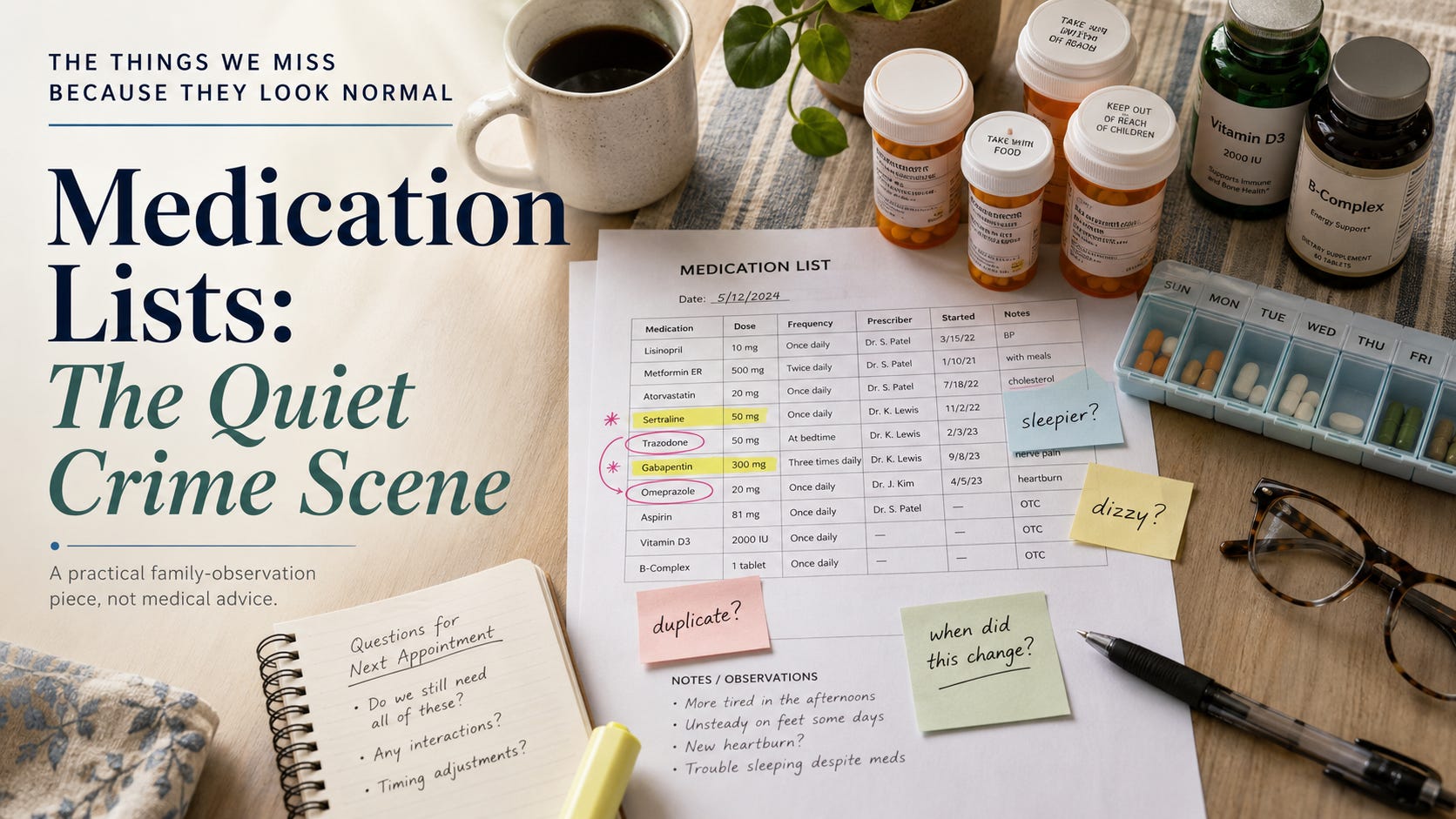
Medication lists look so official.
So tidy.
So complete.
So reassuring.
But sometimes that tidy little list is not really a list at all. It is a quiet crime scene with excellent formatting.
Not because anyone is careless. Not because doctors are villains. Not because families are failing.
But because side effects, interactions, duplicate assumptions, old bottles, new supplements, hospital discharge changes, and missed patterns can hide in plain sight.
And once dementia is in the room, every change can get blamed on the diagnosis.
More tired? Dementia.
More confused? Dementia.
More anxious? Dementia.
More unsteady? Dementia.
Maybe.
But maybe not.
Maybe a medication changed. Maybe two bottles do not match the patient portal. Maybe an over-the-counter sleep aid was added. Maybe a supplement nobody thought to mention is now part of the routine. Maybe the pharmacy list, discharge list, and kitchen-table reality are quietly telling three different stories.
Families are not there to play doctor.
But families can notice.
They can document.
They can ask better questions.
And one of the most important questions may be:
Before we call this decline, can we please look at the whole list?
This was originally a post in my MiM blog series, The Things We Miss Because They Look Normal.